
LED vs LCD Video Walls
LED and LCD video walls can both create large, high impact displays, but they use very different technologies and offer different advantages. For businesses planning a digital display, the right choice depends on the viewing distance, installation environment, image requirements, available space, maintenance expectations, and budget. Understanding how these technologies differ makes it easier to determine which solution fits a specific application. A closer look at display construction, image quality, installation, and long term considerations can help businesses make a more informed decision.
How LED and LCD Video Walls Work
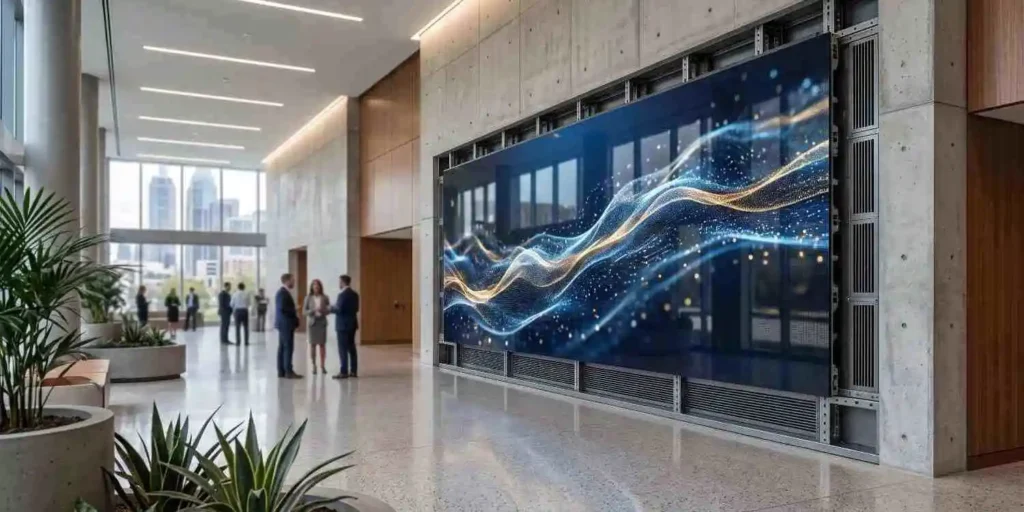
An LED video wall uses individual LED modules to create one large display surface. Because the LEDs produce their own light, an LED wall does not require a separate backlight. This allows manufacturers to build very large displays with narrow viewing angles between modules and flexible configurations. If you want a basic explanation of the technology, this guide to what an LED video wall is provides useful background.
LCD video walls are built from multiple LCD panels placed next to one another. Each panel has a visible bezel around its edges, which creates lines between individual screens. Modern LCD video walls can produce excellent image quality, but those bezels remain an important consideration when the display needs to appear as one continuous visual surface.
LED technology is particularly useful for large commercial displays, corporate environments, retail spaces, entertainment venues, churches, conference facilities, and outdoor applications. LCD can be practical for smaller installations where individual panels, conventional indoor display technology, and lower initial equipment costs are priorities.
Key Factors When Choosing an LED or LCD Video Wall
Display size and viewing distance should be considered before choosing the technology. LED video walls can be built at very large sizes without relying on multiple conventional screens. The pixel pitch also affects image clarity, especially when viewers will stand close to the display. Businesses planning an LED installation should understand LED video wall pixel pitch and viewing distance before selecting a specification.
The installation environment is another important factor. Indoor LED displays are designed for controlled environments, while outdoor LED systems require appropriate protection against weather and changing lighting conditions. A detailed comparison of indoor and outdoor LED video walls can help clarify the differences in construction and application.
Cost should also be evaluated beyond the initial purchase price. An LED system may require a larger upfront investment, but its modular construction can make individual component replacement practical over time. LCD systems can have lower entry costs, but replacing panels and managing visible bezels may affect long term considerations. Content requirements, operating hours, maintenance access, brightness, resolution, and expected lifespan should all be included in the planning process.
Important Considerations for Your Video Wall
Image Quality and Viewing Distance
The best display technology depends partly on how viewers will experience the screen. An LED wall with an appropriate pixel pitch can deliver detailed images at close viewing distances while maintaining a large, continuous display surface. LCD panels can provide sharp images as well, particularly in smaller indoor installations, but the panel bezels can remain visible across the completed wall.
Installation and Long Term Maintenance
Installation requirements vary significantly between LED and LCD systems. LED walls are assembled from modules and supporting components, so the structure, power distribution, signal processing, ventilation, and service access need to be planned correctly. LCD walls require accurate panel alignment and suitable mounting structures. Maintenance access should be considered during the design stage, since the easiest system to service is often the one designed with future access in mind.
Choose the Right Video Wall for Your Business
The right choice depends on your space, viewing distance, display size, environment, content requirements, and long term operating plans. Request a recommendation from ProView LED to discuss the requirements of your project and determine which display approach fits your business.